Concrete Slab & Foundation Work
A strong foundation is everything, and we make sure yours is built to last for generations.
Understanding Foundation Work
Your foundation is literally what your entire home sits on. If it is not done right, you will have problems for as long as you own that building. We take foundation work seriously because we know how important it is.
In Owasso and throughout Oklahoma, we deal with challenging soil conditions. Our clay soil expands when it gets wet and shrinks when it dries out. This movement puts constant pressure on your foundation. That is why proper site preparation and drainage are so critical to preventing foundation problems down the road.
There are different types of concrete foundations, but the most common in our area is the slab-on-grade foundation. This is a single layer of concrete poured directly on prepared ground. It is cost-effective, durable, and works well for our climate. We also do pier and beam foundations when needed, especially for properties with uneven terrain.
Whether you are building a new home, adding a garage, or constructing a shed or barn, the foundation work needs to be perfect. There are no do-overs once a building is sitting on top of it. That is where our experience and attention to detail make all the difference.
The Foundation Installation Process
Let me walk you through what happens when we install a concrete slab foundation. Understanding the process helps you see why it takes the time it does and why each step matters.
First, we excavate and grade the site. This means digging out the area where your foundation will go and making sure the ground is level and at the right elevation. We pay close attention to drainage at this stage. Water needs to flow away from your foundation, not toward it.
Next comes the base material. We typically use 4 to 6 inches of compacted gravel or crushed stone. This provides a stable base and helps with drainage. We compact it thoroughly with heavy equipment. Any settling that happens needs to happen before we pour concrete, not after.
Then we install a vapor barrier. This is a thick plastic sheet that goes over the gravel. It keeps moisture in the ground from wicking up through your concrete. This step prevents a lot of problems with moisture and helps your foundation stay dry and stable.
Before pouring, we set up the forms and install reinforcement. Forms are temporary walls that hold the concrete in place until it hardens. For reinforcement, we use steel rebar in a grid pattern. This makes the concrete much stronger and helps it resist cracking. The size and spacing of the rebar depends on what the foundation will support.
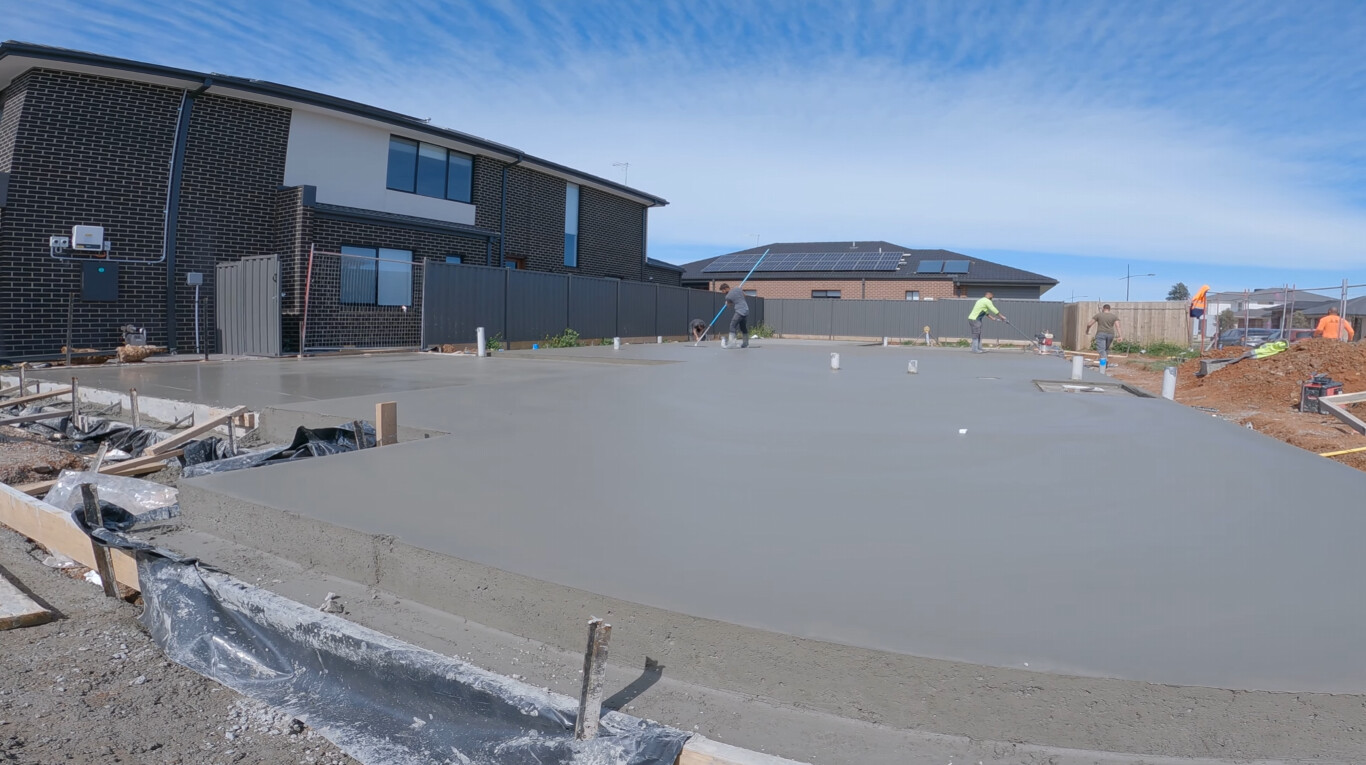
Finally, we pour and finish the concrete. For a typical residential foundation, we use 4 to 6 inches of concrete. We pour it all in one day if possible to avoid cold joints where separate pours meet. After pouring, we use power trowels and hand tools to create a smooth, level surface. Then the concrete needs time to cure properly before any construction can begin on top of it.
Types of Slab Work We Do
Foundation work is not just for new houses. We do all kinds of concrete slab work for different purposes. Here are the most common projects we handle.
- House foundations: The main foundation for new home construction. This is the most critical slab work we do because everything else depends on it being perfect.
- Garage slabs: Whether attached or detached, garage floors need to be strong enough to support vehicles. We typically pour these 4 to 6 inches thick with proper reinforcement.
- Shop and barn floors: If you are building a workshop, storage building, or barn, you need a solid concrete floor. We make them strong enough for equipment and vehicles.
- Shed pads: Even small storage sheds benefit from a concrete pad. It keeps them level, protects them from moisture, and makes them last longer.
- Equipment pads: Air conditioning units, generators, and pool equipment all need level, stable pads. We size them appropriately for the equipment and make sure drainage is right.
After your foundation work is complete, you might want to think about other concrete improvements around your property. Our concrete driveway services can provide the perfect entrance to your newly constructed building.
Signs You Need Foundation Repair
Sometimes we get calls from homeowners who have existing foundation problems. Here are the warning signs that you might need foundation repair or replacement.
Cracks are the most obvious sign. Not all cracks are serious, but some definitely are. Hairline cracks are usually not a problem. But if you see cracks wider than a quarter inch, cracks that are getting wider, or cracks that go all the way through the slab, you should have someone look at it.
Uneven floors are another red flag. If your floors are noticeably sloped or if doors and windows are sticking, your foundation might be settling unevenly. This happens when the soil underneath shifts or erodes.
Water problems often point to foundation issues. If you are getting water in your basement or crawl space, or if you notice moisture coming up through your concrete floor, the foundation might have cracks or the drainage around it might be failing.
Gaps around windows and doors, cracks in interior walls, or cracks in exterior brick are all signs that your foundation might be moving. The house settles over time, but if it happens unevenly or excessively, you have a foundation problem that needs attention.
If you already have foundation damage, check out our concrete repair and replacement services to learn about your options for fixing existing problems.
Common Questions About Foundation Work
Here are the questions we hear most often about concrete slabs and foundation work.
Planning a new construction project? Your foundation is the most important part of the entire build. Let us help you get it right.
Contact us today for a consultation and estimate. We will evaluate your site, discuss your project needs, and provide a detailed proposal for your concrete slab or foundation work.