Concrete Patios
Transform your backyard into the outdoor living space you have always wanted.
Why Concrete Makes Great Patios
When you are planning a new patio, you have lots of material choices. Wood decks, pavers, natural stone, and concrete all have their place. But for durability, low maintenance, and value, concrete is hard to beat.
Here in Owasso, we get hot summers, cold winters, and everything in between. Your patio needs to handle all of it without falling apart or requiring constant upkeep. Concrete does exactly that. It does not rot like wood, it does not shift like pavers, and it costs less than natural stone while lasting just as long.
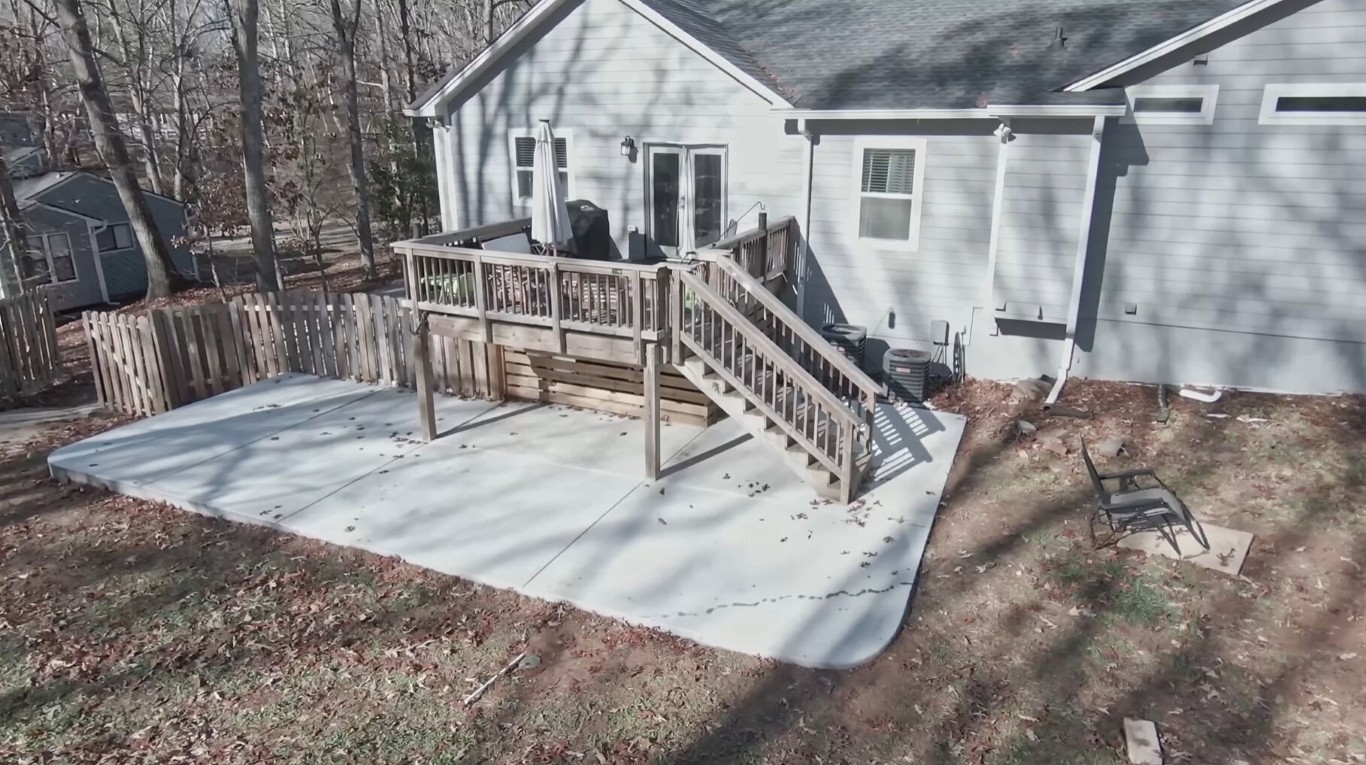
Concrete patios also give you design flexibility. You can pour them in any shape to fit your yard perfectly. No trying to make rectangular pavers work in a curved space. Want a circular patio around a fire pit? No problem. Need it to flow around existing trees or landscaping? We can do that too.
And concrete is not boring gray anymore. With colors, stamps, textures, and other decorative techniques, your concrete patio can look like expensive stone, tile, or brick. You get the high-end appearance without the high-end price tag or maintenance headaches.
Planning Your Perfect Patio
A good patio starts with good planning. Before we pour any concrete, we need to think through how you will use the space and what will make it work best for your needs.
Size matters, but bigger is not always better. Think about what you want to do on your patio. If it is just for a small table and a couple of chairs, you might only need 100 to 150 square feet. For outdoor dining with a larger table, plan for at least 200 square feet. If you want space for a grill, seating areas, and room to move around, 300 to 400 square feet or more makes sense.
Location is just as important as size. Your patio needs to drain properly, so we avoid low spots where water collects. Sun exposure matters too. A patio on the west side of your house will get hot afternoon sun. That might be perfect for cool spring evenings, but brutal in July. Trees provide shade but drop leaves. These are all things we talk through during planning.
The shape should complement your house and yard. Patios attached to the house often work best as rectangles or L-shapes that extend the roofline. Freestanding patios can be any shape that makes sense. Curves and flowing lines often look more natural in landscaped areas.
Finally, think about access. How will you get from your house to the patio? Do you need steps? What about getting furniture and a grill out there? These practical considerations matter just as much as the aesthetic ones.
Design Options to Consider
Once we have the basic plan sorted out, it is time to think about how you want your patio to look. Here are the most popular design options we offer.
- Standard finish: This is your classic broom-finish concrete. It has texture for slip resistance, costs the least, and looks clean and simple. Perfect if you are on a budget or prefer a minimalist look.
- Colored concrete: Add color to match your house or landscape. Earth tones like tan, brown, and terracotta are popular in Oklahoma because they blend with the natural surroundings.
- Stamped patterns: Make your concrete look like flagstone, slate, brick, or tile. This gives you the upscale appearance of expensive materials at a fraction of the cost.
- Exposed aggregate: Reveal the natural stones in the concrete for a textured, sophisticated look. It also provides excellent traction when wet.
- Borders and accents: Add contrasting colors or patterns around the edges to frame your patio and add visual interest.
Want to see what stamped and decorative options can do? Our stamped and decorative concrete page has detailed information about patterns, colors, and finishes to help you envision your perfect patio.
The Installation Process
Understanding what happens during installation helps you know what to expect. Here is how we build a patio that will last for decades.
First comes site preparation. We mark out the exact location and shape, then excavate to the proper depth. Usually this means digging down 6 to 8 inches. We need room for the base material and the concrete itself.
Next we install and compact the base. This is typically 4 inches of crushed gravel or road base. We compact it with a plate compactor or roller to create a solid, stable foundation. Proper compaction prevents settling and cracking later.
Then we set up the forms. These temporary walls define the edges of your patio and hold the concrete in place until it hardens. We make sure everything is level and at the right height, with a slight slope for drainage.
Before pouring, we add reinforcement. This is usually wire mesh or rebar in a grid pattern. It gives the concrete tensile strength so it can flex slightly without cracking.
Finally, we pour and finish the concrete. For a typical patio, we pour 4 inches thick. After the concrete is placed, we level it, smooth it, and apply whatever finish you have chosen. Then it needs time to cure before you can use it. You can usually walk on it after 24 to 48 hours, but wait at least a week before putting furniture or heavy items on it.
Already have a concrete driveway and want to match your new patio to it? Check out our concrete driveway services to see how we can coordinate both surfaces for a cohesive look.
Common Questions About Concrete Patios
Here are the questions we get asked most often about concrete patio installation.
Ready to start enjoying your backyard more? A new concrete patio is one of the best investments you can make in your home and your quality of life.
Contact Owasso Concrete today to schedule a free consultation. We will visit your property, discuss your ideas, and provide a detailed estimate for your new patio.